Are Roadkill Deer Too Damaged To Be Usable?
The Story of the gutted buck
This past October, my friend and I were on a roadkill drive. We had chosen a good morning to search for roadkill, as the temperatures were cold and there were plenty of deer crossing the road. Less than an hour after setting off, we came across our first casuality. Laying on the pavement, was a young buck. When we pulled over to check him out, it was clear he hadn’t been dead for long. His body felt warm to the touch, and his legs weren’t even stiff. The temperature was around 35 degrees fahrenheit, so it was very likely the meat was still good.
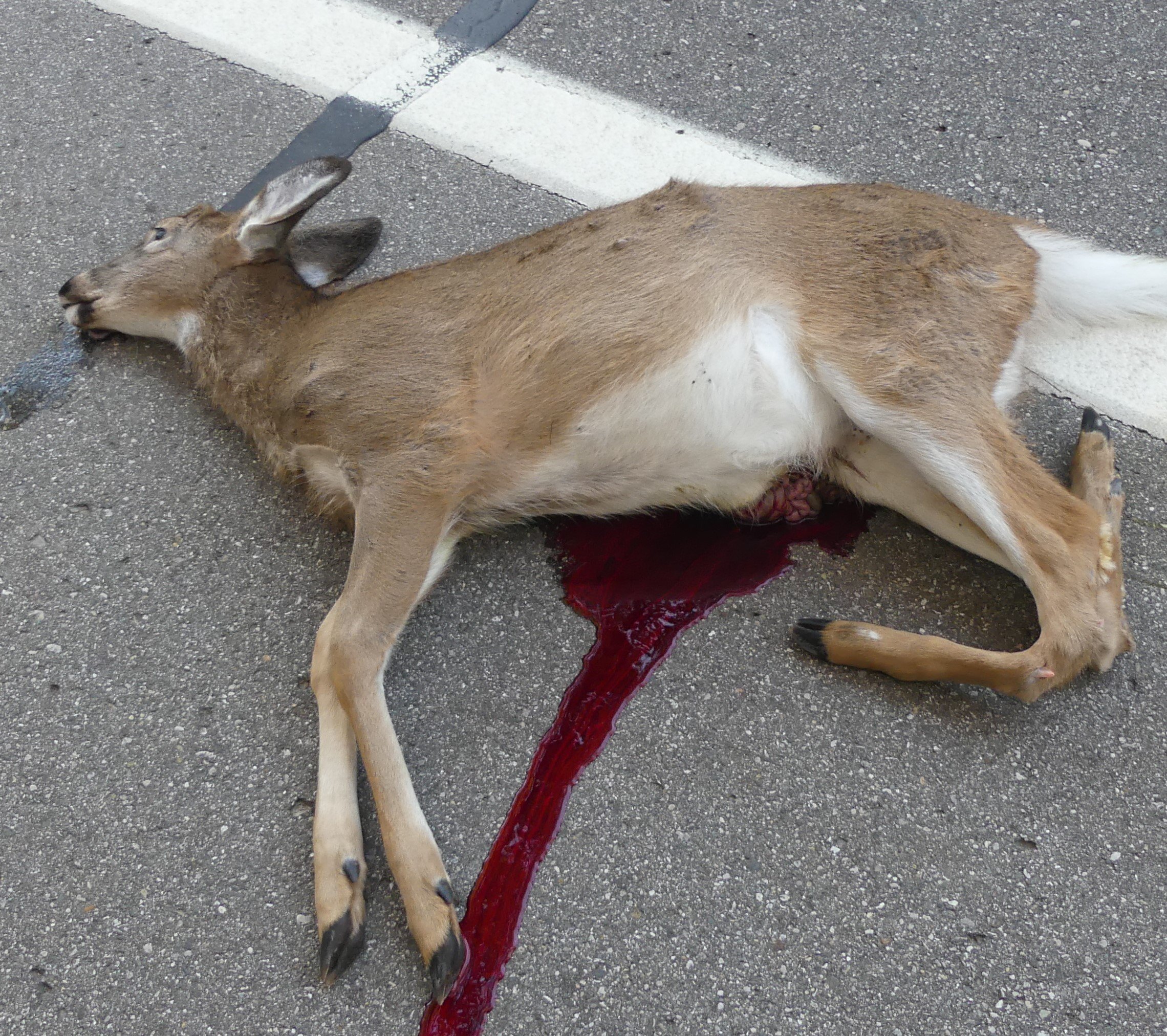
When we flipped him over, we realized there was a problem. Poking out of a hole in his side, were his intestines. Not wanting to have a messy butchering experience, we decided to pass on him. As we kept driving however, I couldn’t shake the fact we abandoned such a fresh animal. Not wanting to return home empty handed, we turned around and retrieved him. He was so fresh, that even with his guts out, he did not stink up my vehicle.
Butchering this deer was a learning experience. I didn’t dare gut him, as I was concerned that I would spill stomach contents onto the meat. Not wanting to cross contaminate, I used two different knives to skin him. One knife was for the clean and undamaged areas, while the other was used to cut around his wounds and exposed organs. After a tedious hour, we successfully worked around the carnage. Despite the damage on the inside, a surprising amount of meat on the outside was salvageable and untouched by the stomach contents. His hide was also in good condition, and would later be used to make buckskin. If I hadn’t changed my mind about passing up this deer, he would’ve quietly rotted away on the pavement.
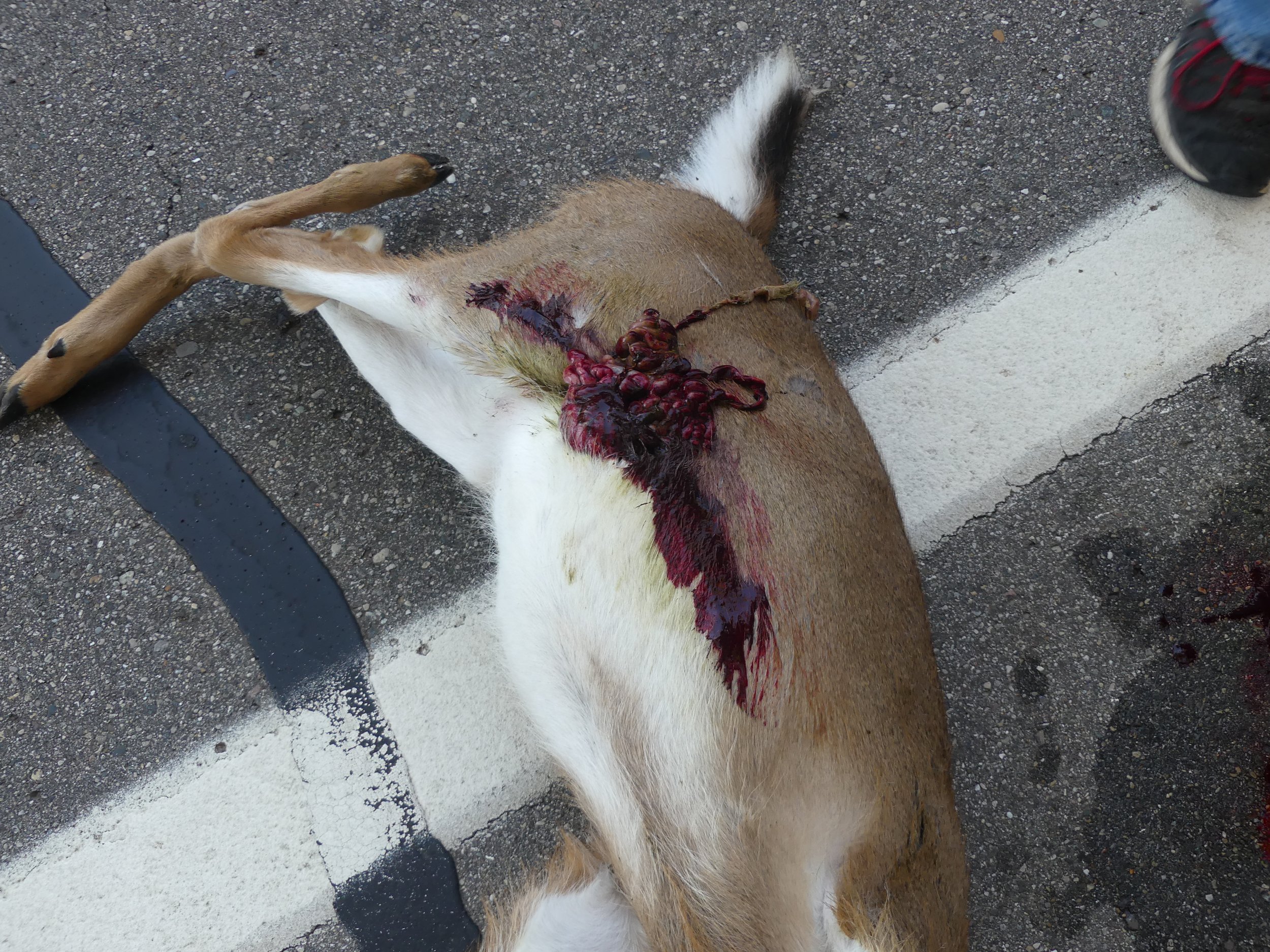
Although the wound was gruesome, the deer was so fresh that he did not stink. He provided us with plenty of good meat!
The Truth About Harvesting Roadkill Deer
Many people avoid picking up roadkill deer because they write them off as being “too damaged.” They are quick to assume that the meat is too bruised, or tainted by organs juices, without properly looking at the animal. Even if only one part of the deer is wrecked, it’s enough to turn most people away. As someone who has been harvesting roadkill for a while, I think this mindset results in a lot of wasted meat.
The truth is, every roadkill deer will sustain some sort of damage. It’s simply a matter of some deer having more damage than others. I’ve picked up deer that appeared unscathed, as well as deer that have been smashed by semis. While there is a tiny minority of deer I would agree are unsalvageable, I’d say close to 95% of my harvests had at least some usable meat. Even extremely bruised deer have left me with 10-15 pounds of edible steaks.
The worst damage you have to worry about when harvesting roadkill deer, is damage to the internal organs. While punctured lungs or livers are no big deal, a ruptured stomach can make for a messy butchering experience. Although you can remove and set aside bruised meat, it is difficult to wash off meat that has been contaminated by stomach juices. Contrary to what most people believe, the meat from a gut busted deer is most likely to be ruined during the butchering process rather than the impact itself. For example, if you attempt to gut a deer with a splattered stomach, you can spill stomach contents onto the good meat on the outside. Fortunately, there are ways to work around exploded innards that still result in tasty and safe meat.
After being told many times that roadkill deer are “too wrecked,” I decided to put this assumption to the test. I compiled some “data” based on seventeen deer harvested by my friends and I. I divided the deer into five parts: the neck, backstraps, frontquarters, hindquarters, and tenderloins. On every deer we found, I took note of which areas sustained damaged. As I expected, what I found disproved the misconception that roadkill deer are not salvageable.
My Findings:
If you pick up a roadkill deer, you are almost guaranteed a neck roast. Out of the seventeen deer, only one had a broken neck. This is no surprise, as deer have very strong necks. Bucks have especially dense necks, as they use their neck muscles to rub trees and fight rivals during the rut. The skin on the neck is also quite thick, protecting the deer from sharp antler points during scuffles. Anyone who has eaten a deer neck roast knows that it must be slow cooked for many hours to soften the tough muscles.
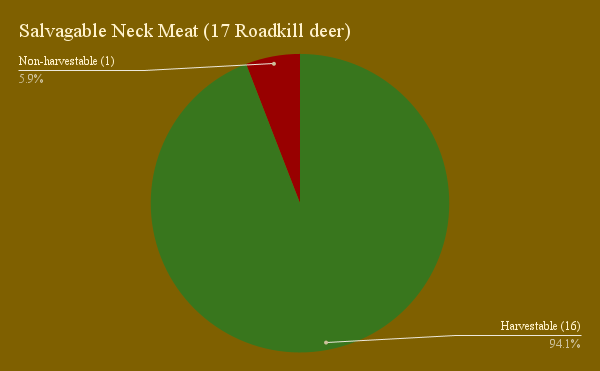
Out of 17 roadkill deer, only one had neck meat that was unusable. We ended up with a neck roast 94% of the time.
As well as the neck meat, it is very likely you’ll end up with both front quarters. The front quarters consist of the meat on the shoulder blade and upper front legs. Only one deer out of the seventeen had major damage to the front quarters. As any hunter knows, deer shoulders are very tough. The shoulder blade is thick enough to deflect arrows while leaving the deer’s lungs unscathed. While the majority of roadkill deer seem to have broken front legs, the shoulder meat above is almost always in good condition.
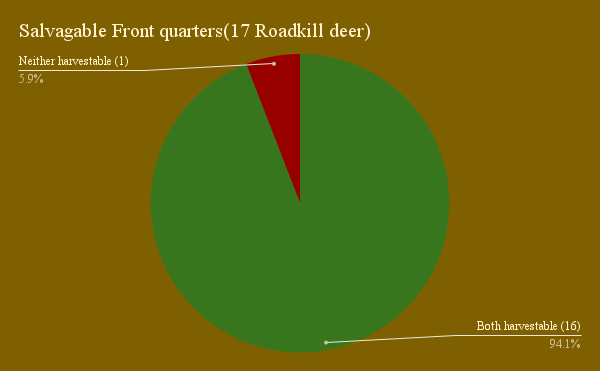
The front quarter chart strongly resembles the neck roast chart. We had a 94% chance of getting a deer with two good frontquarters. The only deer that didn’t have good front quarters was plowed by a semi.
Next up, are the backstraps. The backstraps are the tastiest, most sought after part of a deer. They are the thick strips of meat that run along the deer’s back and ribcage. Out of the seventeen deer: two had one backstrap damaged, and another two had both damaged. I observed that deer with bruised backstraps usually had broken ribs or broken spines. Regardless, the majority of deer still had atleast one salvagable backstrap.
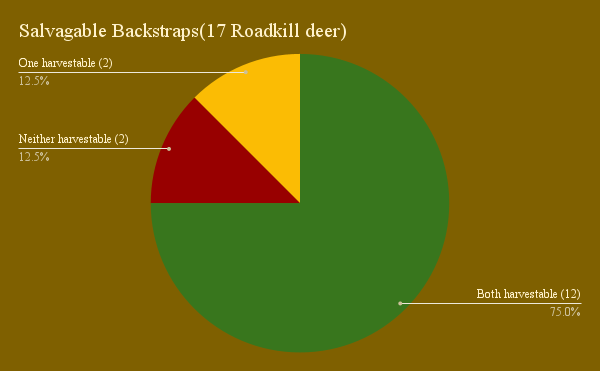
Roughly 3 out of every 4 deer we found had two good backstraps. The deer that lost one or both backstraps tended to be heavily damaged.
The odds of salvaging both hind quarters are much lower. A deer’s hind quarters consist of the back legs, rump, and pelvic area. Out of the seventeen deer, five had damage to one hind quarter, and four had damage to both. Therefore, just over 50% of the deer we salvaged had a bruised rear end. If I had to guess, many deer are slammed in the rear while fleeing from oncoming traffic. This is unfortunate, as most of the meat on a deer will be found in the hind quarters.However, if the hit was mostly concentrated in the back, it is likely the rest of the animal will be in good condition. Regardless, a hind quarter hit deer should not be a deal breaker.
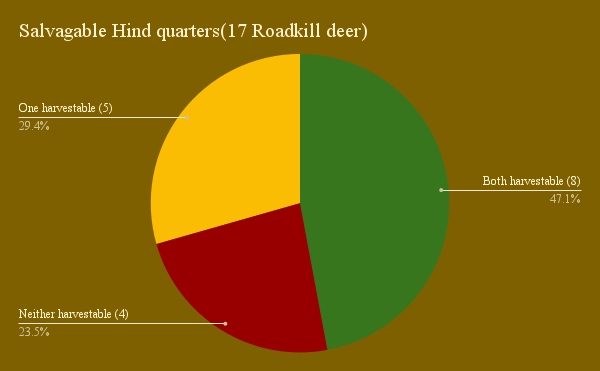
The odds for harvesting both hind quarters are much less favorable compared to the backstraps and front quarters!
One part of a roadkill deer you can pretty much forget about, are the tenderloins. The tenderloins are two small strips of meat on the inside of the ribcage. They sit between the pelvis and lower ribs. Tenderloins are comparable to backstraps; delicious and of course, tender. Unfortunately, only 3 out of the seventeen had usable tenderloins. When a deer sustains internal injuries, the tenderloins are often smashed to pieces or contaminated with stomach contents. While it is easy to avoid tainting the meat on the outside, any meat on the inside is most likely toast.
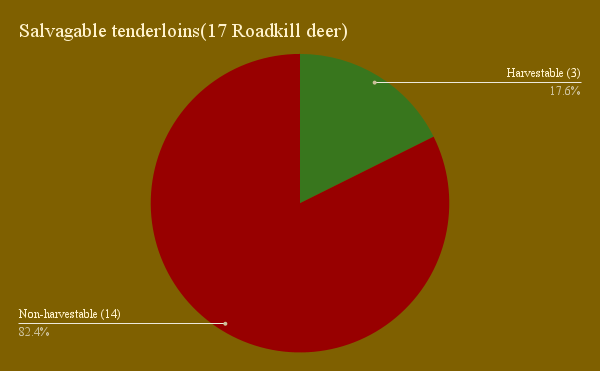
Needless to say,the tenderloins on most roadkill deer are unusable!
Surprisingly, the organ meats appeared to be more salvageable than the tenderloins. Out of the seventeen deer, I ate the organ meats from at least five of them. If there isn’t stomach contents loose within the body cavity, you may be able to snatch the heart, kidneys, or the liver. I found that the heart tends to be in the best condition, as it is the furthest away from the stomach and intestines.
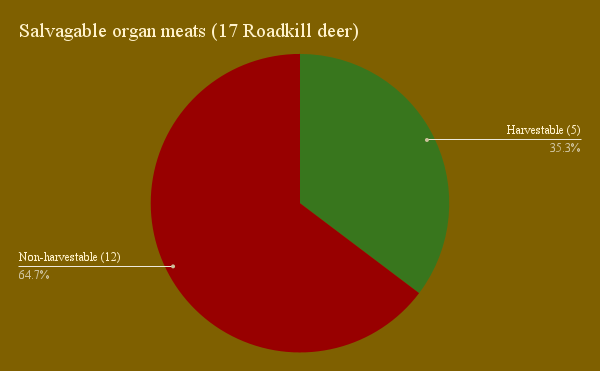
Approximately 1 out of 3 roadkill deer we found had usable organs. If the organs aren’t smeared with stomach juices, rinse them well and give em a go!
Factors That Affect How Damaged a Deer Will Be
1. Speed Limit- Deer hit by cars driving at higher speeds will suffer worse injuries. I’ve found deer struck on interstate highways reduced to nothing more than a pile of blood and guts. On the other hand, I’ve harvested deer on 30mph city roads that appeared almost unscathed. Therefore, I recommend being cautious of roadkill deer hit on roads where the speed limit rises above 55mph, as you’re much more likely to have a messy butchering experience.
2. The Nature of the Collision- I’ve found that the point of impact on the vehicle also determines the condition of the meat. A deer smashed head-on by a bumper will be in worse shape compared to a deer that bounces off the side of a vehicle. The fabled and often unscathed head-hit deer is usually the result of a deer charging head-first into a car door.
3. The size of the animal- Many of the smaller deer I have collected have worse injuries compared to larger deer. The majority of the disemboweled deer I have come acrosst were either fawns (6 month old deer) or small yearlings (1 or 1.5 year old deer). The bigger bucks and does I’ve collected tended to fare better.
Signs of Internal Damage:
The belly looks flat but has a “lump”-. A lump on a roadkill deer’s belly is usually a sign that the organs have been pushed out of the body cavity, but not through the hide. The good news is that these organs may not be ruptured. If none of the contents is spilling onto the meat, you can gut or hang the deer as normal. However, you must take great care to not cut anything you’re not supposed to!
The belly appears lopsided- A strangely shaped belly can be a sign of heavy internal bleeding. As blood pools within the body cavity, the abdomen may stretch and contort. A lopsided belly can resemble a bloated belly, but will appear to “sway” to one side. As long as there isn’t any loose stomach contents, you can drain the body cavity and gut the deer as normal. However, if you notice grass or corn floating within the pool of blood, stop gutting the deer immediately.
The deer looks fresh, but has an overpowering odor of feces- A deer that smells like fecal matter means two things: bloating or poop soup. A mildly bloated deer isn’t a cause for concern as long as it the stomach doesn’t resemble a balloon. However, if deer doesn’t appear bloated, or the belly is an odd shape, there is a good chance that stomach is ruptured. Do not gut this deer.
There is blood coming from the anus or genitals- Bleeding from the vent is a warning of ruptured intestines. It is also present on decomposing deer, as rotten fluids will often be expelled from the deer’s nether reigons. If you find a fresh deer with a bloody butthole, great care must be taken to not ruin good meat.
Visible entrails- This one is obvious. If the guts are outside the body, there is certainly internal damage. However, the damage you can see is better than the damage you can’t…. Do not try to gut this deer.
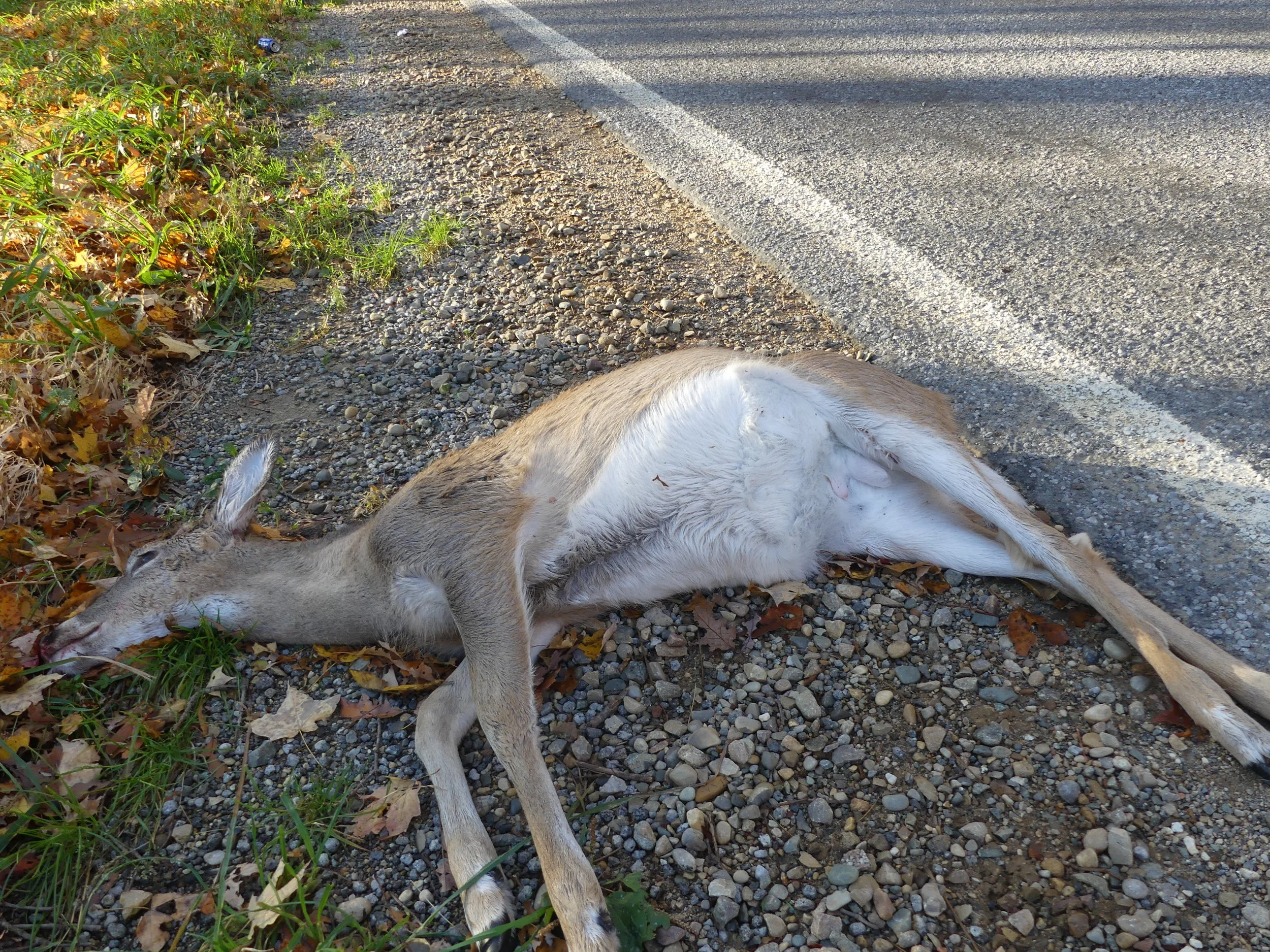
This young buck has a lump on the lower half of his belly. Notice how his belly looks almost normal, but there is a bump touching the ground.
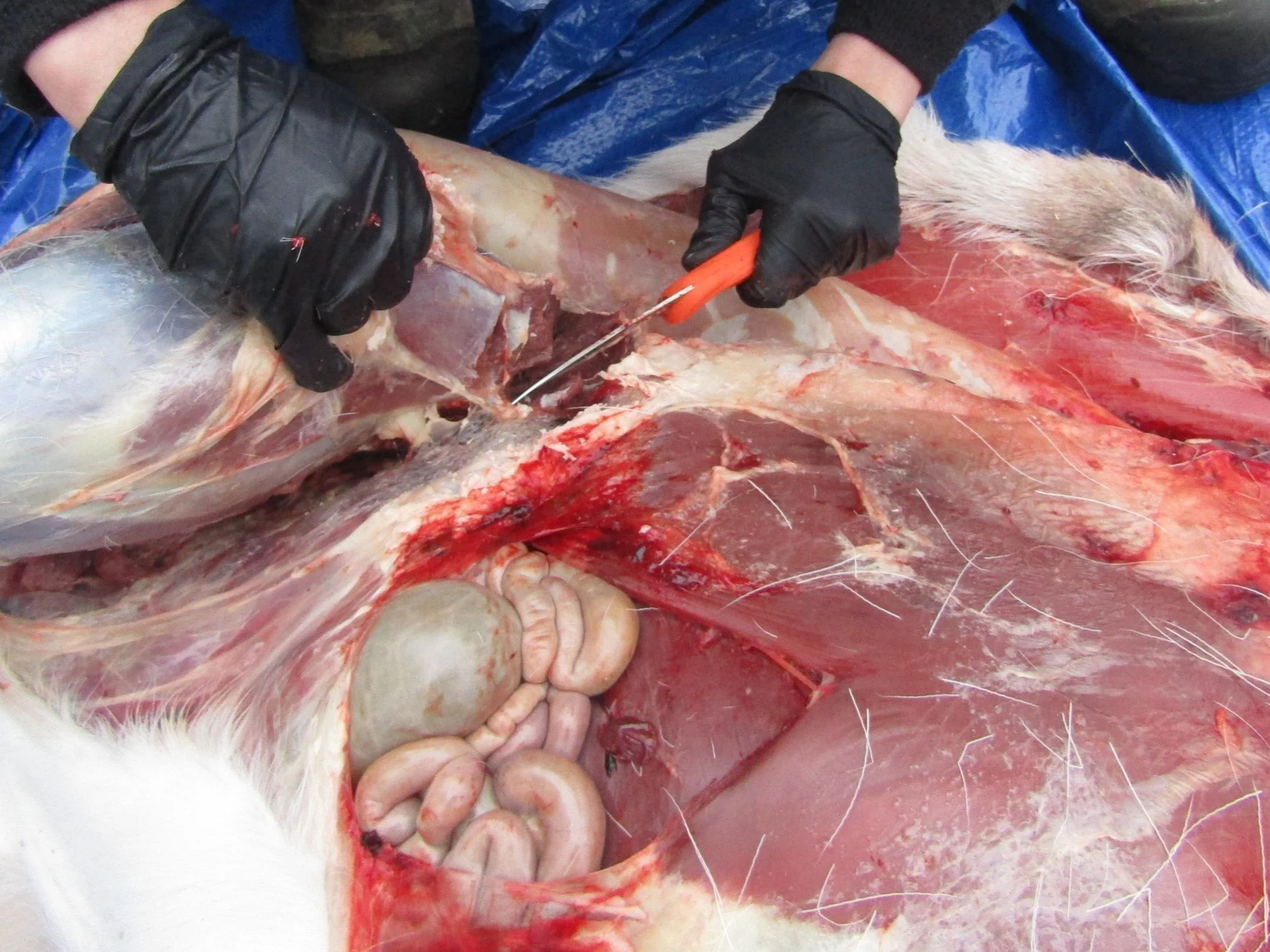
This is often what a lumpy bellied deer looks like when you remove the hide. The organs are peeking through the cavity, but aren’t ruptured.
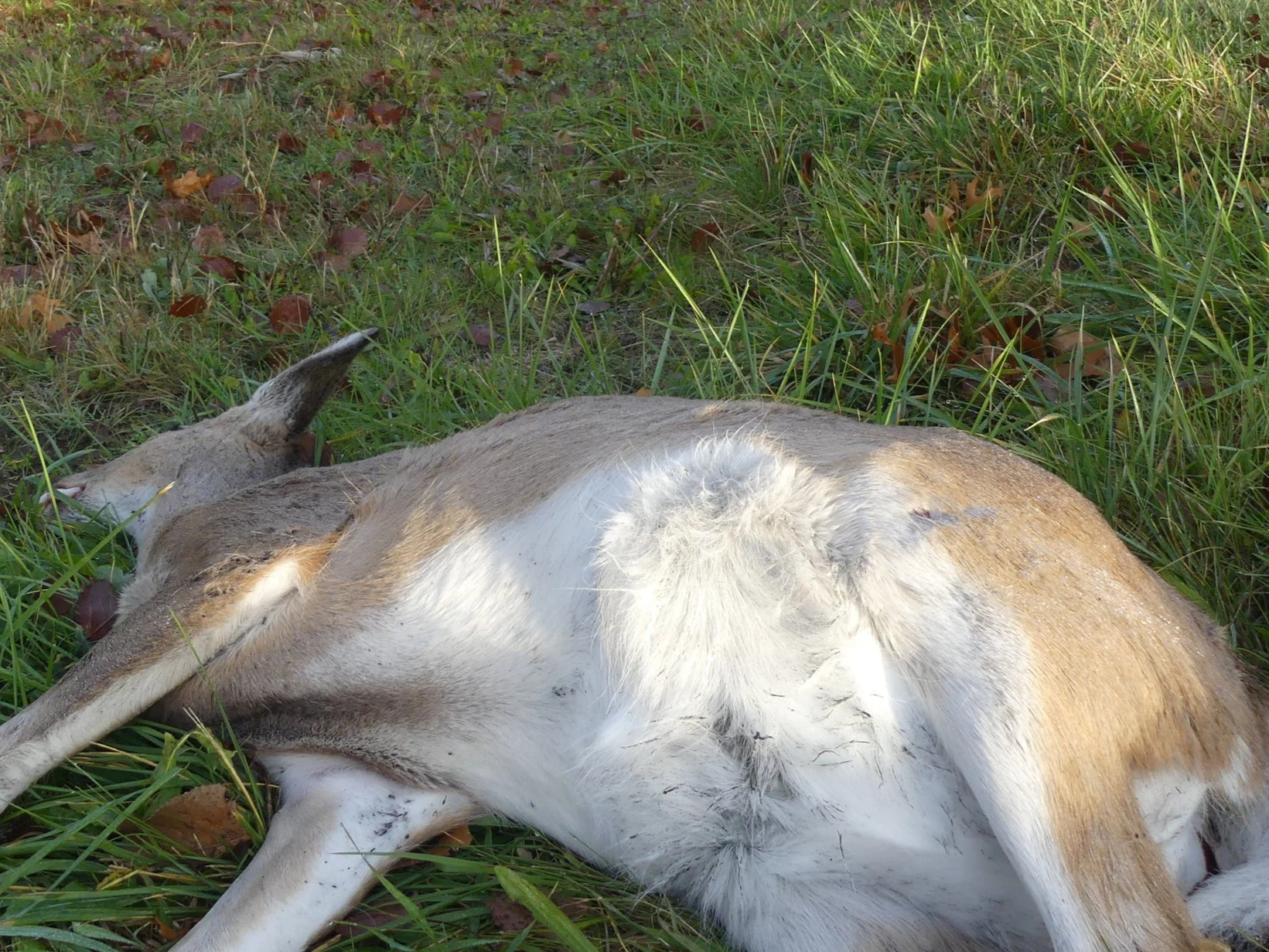
The doe has a lopsided belly. Notice how it appears to sway to one side.
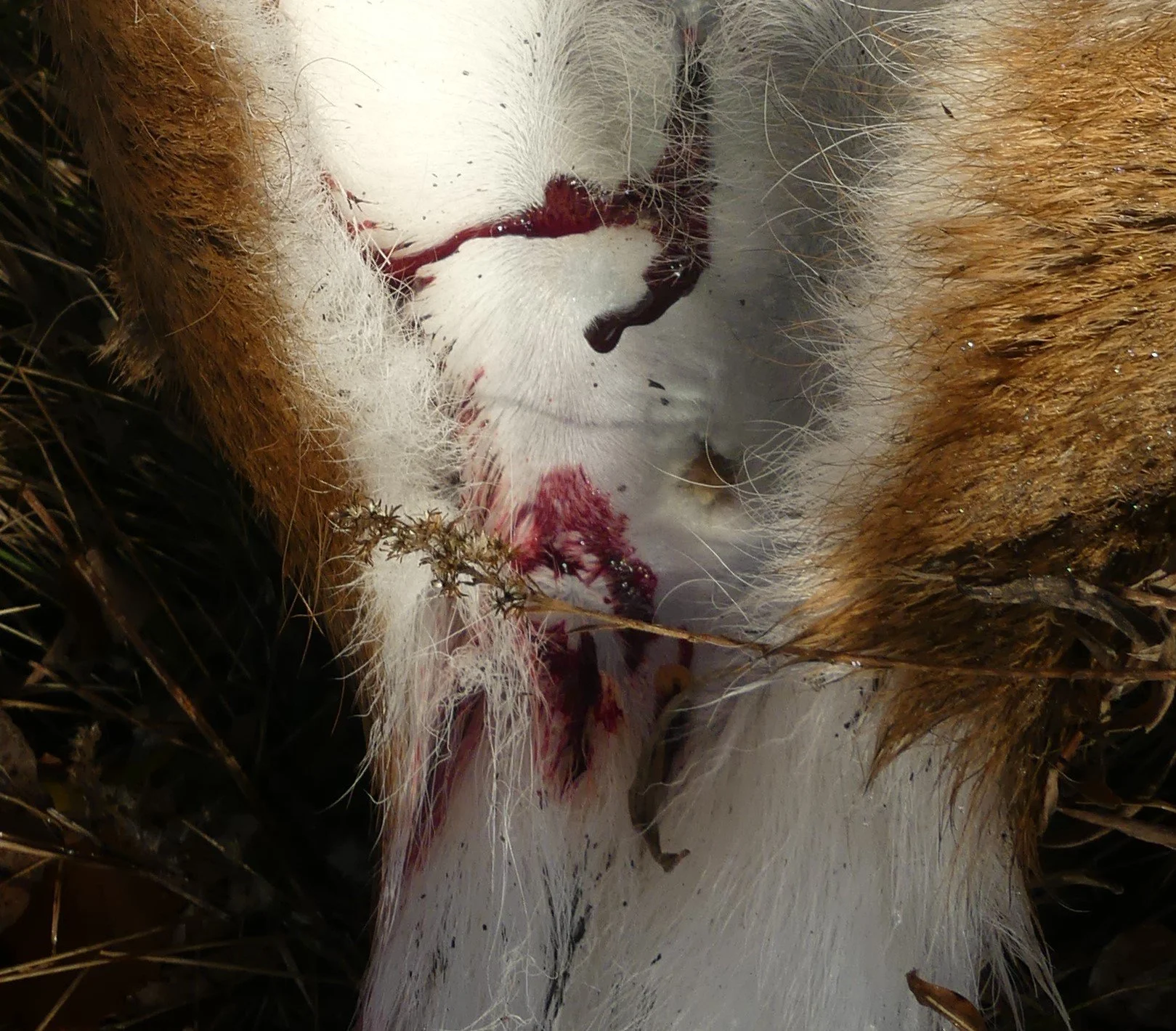
That same doe blood leaking from her vent. She definitely had some internal damage…
Butchering Gut Busted Deer
If you suspect a roadkill deer has a ruptured stomach, great care must be taken to not taint the meat. I do not recommend gutting a stomach blown deer, as the chances of tainting the meat are high. In addition, you may have a hard time seeing where you’re cutting if the innards have been reduced to a blood smoothie. When butchering a roadkill deer, you must always be mindful of cross contamination. I always keep spare knives on hand, as well as wipes for cleaning bodily fluids off the blades. In addition, I take note of any areas where stomach contents may be leaking, and position the deer so that the fluids don’t drip onto the meat.
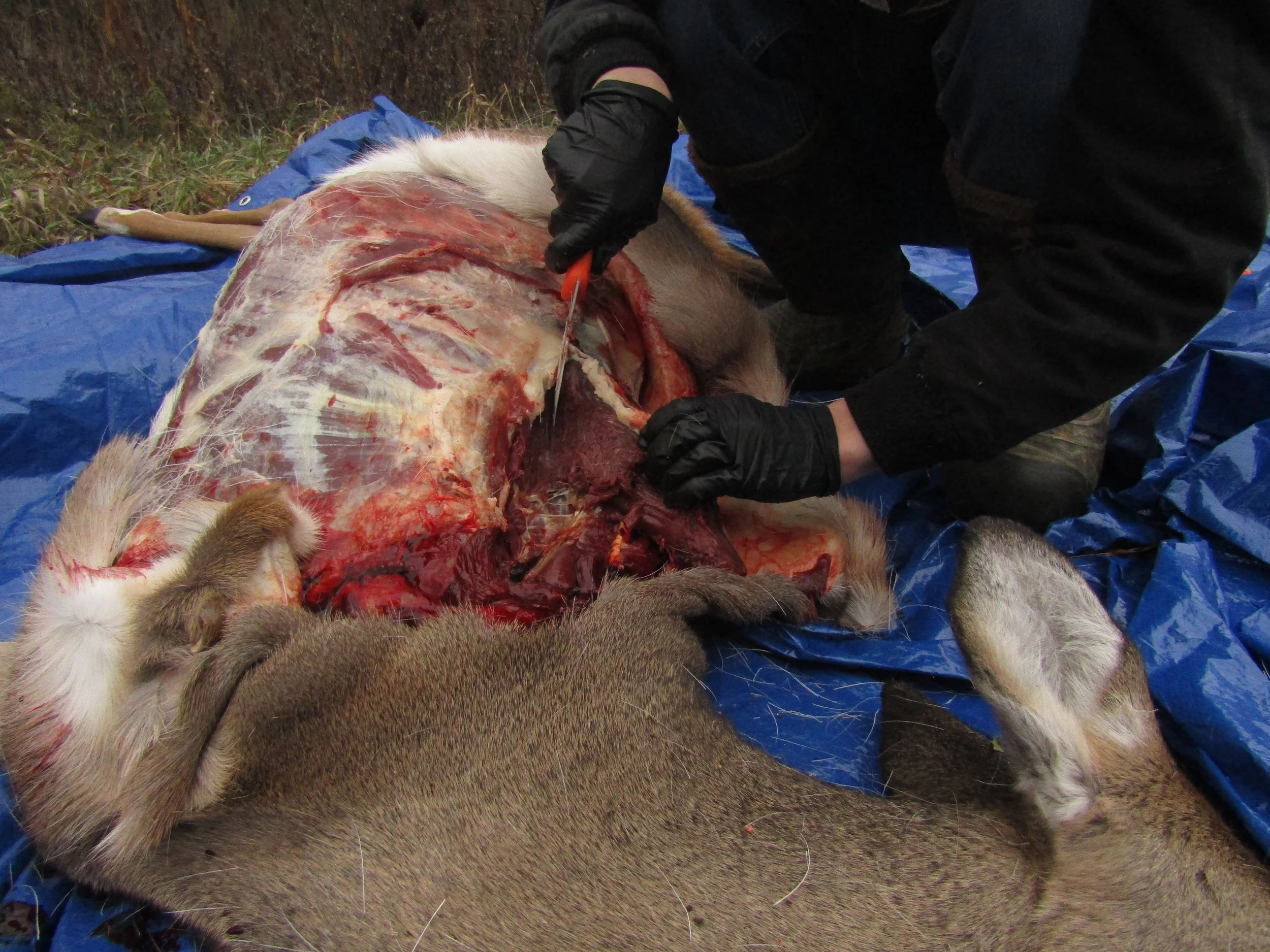
There are two ways I skin gut busted deer. If I intend on using a deer’s hide, I skin the deer as normal. However, instead of making a deep cut along the underbelly, I make a shallow cut that opens the hide, but not the rib cage. I remove the quarters and backstraps in the same fashion as I would if I had gutted the deer. Not only am I able to easily access the meat, but the hide comes off in one clean piece.
If I am in a hurry or don’t intend on using the hide, I take a more direct path to the meat. I make a cut along the deer’s spine and backside of the legs above the knee joint. As I open up the hide, I pull off any undamaged meat from the outside. This is an excellent way to access the backstraps, as well as the meat on the legs. I know many roadkill salvagers who lack the space to butcher deer, and use this method to quickly quarter out the deer on the side of the road.
Unfortunately, there is a downside to not gutting your deer. When left in the body, the organs retain a lot of body heat, as well as bacteria. As a result, dead deer left with the guts in will spoil quicker. This is especially true if the deer has internal damage, as any spilled stomach contents will accelerate any spoilage already present. Therefore, if you’re working with a gut busted deer, you must work quickly but carefully. You’ll know if the innards have tainted the meat if you spot any green areas. However, it is better to work fast, than risk spilling bodily juices onto the meat.
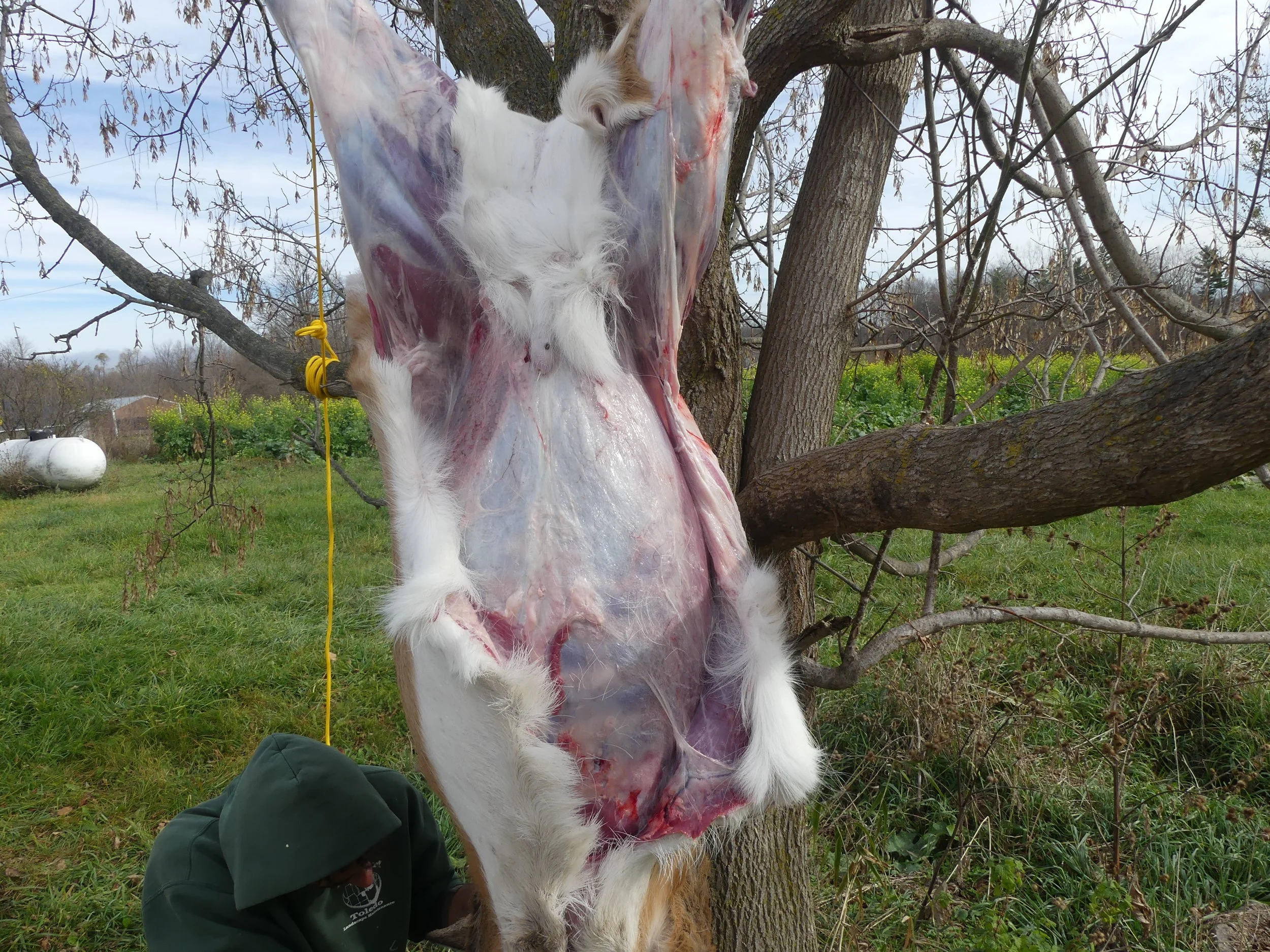
If you intend on using the deer’s hide, skin the deer as you would normally, but do not cut directly into the body cavity. When we skinned out this buck, we cut just deep enough to release the hide, but not the organs,
If you’re only interested in the meat, you can take a more direct path by cutting along the deer’s back and side.
What About Deer That Are Actually Unsalvagable?
There are a small minority of roadkill deer that I would consider to be unusable. For example, a deer slammed and ran over by a semi is likely not salvagable. If a deer gets crushed or is in multiple pieces, you can pretty much forget about it. I typically find deer in this condition along interstates, where cars are traveling over 70 miles per hour.
In some cases, you might not realize a deer is unusable until you take him home. You may peel back the hide to find all of the meat to be bruised or turning green. Even if you end up with a deer in this condition, you should try your best to ensure that he doesn’t go to waste. If you know any local wildlife rehabbers or animal sanctuaries in the area, they may be able to use the damaged meat to feed their animals. If you’re a land owner or know a land owner, you can feed his carcass to local wildlife. You could also compost the deer by burying his body beneath woodchips or mulch. Even if you’re not able to use a deer, other creatures will be happy to feed on him.
In Summary….
Unless a roadkill deer has been torn to shreds, you should not write the deer off as “unsalvagable”.You must keep in mind, all roadkill deer will have some form of damage. Even if the deer has severe injuries, you still have a good chance at salvaging the neck meat, front quarters, and back straps.. However, if you think the deer has a ruptured stomach, you should refrain from gutting the carcass. If you want to avoid having a messy butchering experience, I don’t recommend harvesting roadkill on high speed roads and interstates, as deer hit at such speed will suffer worse injuries. Regardless, you should always examine roadkill deer before you deem them to be unusable. There is a good chance you’ll still end up with a winter’s worth of meat.
This is the young buck I mentioned in the story above. We got plenty of meat off of him, some buckskin, and legs to craft with.
